

Table of Contents
ToggleIntroduction
The programming industry has recognized Java as a dominant force for years because of its critical role in enterprise applications, mobile development, and backend system operations. The programming field keeps changing because new patterns consistently reshape its structure.
Meanwhile, Python has strengthened its position across AI, data science, automation, and backend development. Python has risen to prominence as the Programming Language of the Year and has gained worldwide attention from developers.
Java continues to be a reliable option for numerous industries even with the recent changes in programming preferences. This analysis investigates why Python experienced rapid popularity growth alongside the factors that allowed Java to maintain its strong position in the industry.
Moreover, learners comparing programming careers can explore leading Java training institutes in Chandigarh. Similarly, aspiring mobile developers can review common Android interview questions and answers.
Today, both languages are also adapting to AI-assisted development, cloud computing, automation, and intelligent applications.Moreover, learners comparing programming careers can explore leading Java training institutes in Chandigarh.
Similarly, aspiring mobile developers can review common Android interview questions and answers. Today, both languages are also adapting to AI-assisted development, cloud computing, automation, and intelligent applications.
Python’s Rapid Growth and Popularity
Many developers prefer Python because of its adaptability as well as its simple learning curve and wide range of libraries. Python demonstrates exceptional performance in data science and machine learning applications, while Java remains focused on enterprise solutions. Its straightforward syntax makes Python a perfect programming choice for both new learners and experienced developers.
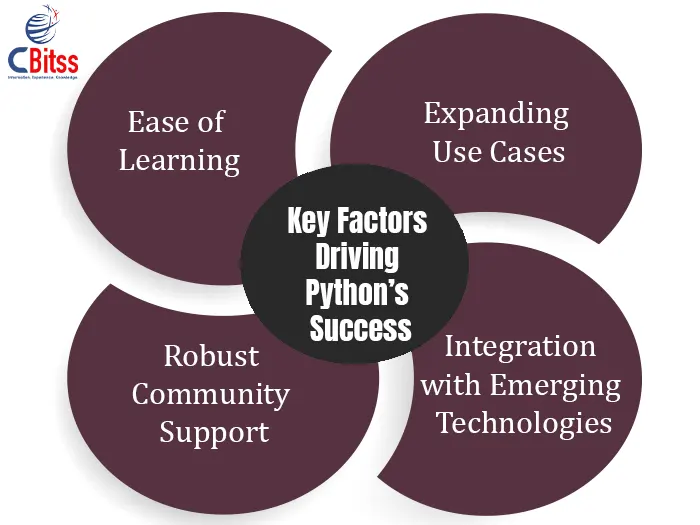
Key Factors Driving Python’s Success
Python’s syntax mimics natural language, which makes learning it simple for newcomers. The growing fields of artificial intelligence and automation have led to Python securing a dominant position within technology-based industries. Python’s open-source system promotes ongoing development through its extensive collection of third-party libraries.
Python shows perfect integration capabilities with cloud computing platforms, IoT systems, and big data applications that boost its effectiveness in current software engineering practices.
Furthermore, Python has become especially important for generative AI, machine learning, data pipelines, and AI agent development. Popular AI frameworks and model libraries continue making Python a practical choice for building intelligent applications. Additionally, recent Python releases officially support free-threaded execution for greater concurrency opportunities.
Multiple interpreters in the standard library also provide developers with additional options for concurrent workloads. Moreover, template string literals provide another modern approach for custom and safer string processing. Consequently, Python continues evolving beyond traditional scripting into demanding AI and backend workloads. Developers can also follow emerging data science technology trends affecting Python-based development.
AI Is Reshaping Programming Workflows
- Artificial intelligence is now changing how developers write, review, test, debug, and document software.
- In addition, coding assistants increasingly generate functions, explain code, create tests, and support refactoring tasks.
- However, developers still need to verify generated code for accuracy, security, performance, and project compatibility.
- Recent developer research shows AI tool adoption has expanded substantially across software development workflows.
- Nevertheless, trust remains a major concern because developers frequently encounter AI-generated answers requiring correction.
- Therefore, human review remains essential when teams use generative AI for production development.
- Furthermore, AI agents are emerging for multi-step coding, testing, research, and software automation workflows.
- Agent frameworks can combine language models with tools, APIs, memory systems, and external data sources.
- As a result, programming skills increasingly include understanding prompts, model integration, RAG, and AI-assisted development workflows.
Java’s Stability and Enduring Presence
Python’s growing popularity does not diminish Java’s essential role within the programming world. Java maintains its preferred position in enterprise solutions and banking applications as well as Android development thanks to its ability to create robust and scalable systems.
Stay ahead of the curve by learning AI-powered design techniques for the web.
Reasons Java Remains Relevant
The “Write Once, Run Anywhere” (WORA) philosophy of Java allows its applications to operate across any platform that supports a Java Virtual Machine (JVM).
Big companies such as financial institutions depend on Java for their backend operations. Java delivers both high-level security and superior performance capabilities which establish it as a dependable option for mission-critical applications.
The Java platform features an extensive set of development frameworks like Spring and Hibernate that simplify software development workflows. Both novice coders and experienced developers can improve their abilities with these Java frameworks through online courses that help them advance their coding expertise and remain competitive in software development.
Moreover, modern Java continues to receive language and runtime improvements designed to simplify development. Module import declarations now reduce repetitive imports when developers work with modular libraries. Compact source files and simplified main methods also make Java more approachable for new programmers.
Additionally, Java remains highly relevant for cloud-native microservices, APIs, distributed systems, and enterprise platforms. Learners targeting these applications can explore Java full-stack development for broader development skills.
Java Enters the Generative AI Ecosystem
- Java is no longer limited to traditional enterprise development when discussing artificial intelligence.
- Instead, the Java ecosystem now provides frameworks designed specifically for generative AI application development.
- Spring AI supports model integration, vector databases, retrieval-augmented generation, and AI application workflows.
- Consequently, Java developers can connect enterprise applications directly with modern language models and AI services.
- Spring AI also supports tool-based workflows that help applications connect models with business functions and external systems.
- Therefore, existing Spring developers can introduce AI capabilities without abandoning their established Java architecture.
- Meanwhile, RAG helps enterprise applications combine language models with organization-specific documents and business data.
- This approach can improve contextual answers while allowing companies to maintain control over relevant enterprise information.
- Additionally, Java developers can build AI-powered chatbots, assistants, search tools, and intelligent enterprise applications.
- Thus, AI development increasingly represents an opportunity for both Python and Java developers.
Head-to-Head: Python vs. Java
Python gains popularity because it is simple and flexible, but Java stands out with unmatched stability and efficiency. Different programming languages demonstrate their strengths in various domains, which requires selecting the appropriate language based on project needs.
Feature | Python | Java |
Syntax | Simple and readable | Verbose but structured |
Performance | Slower due to dynamic typing | Faster due to Just-In-Time (JIT) compilation |
AI Development | Extensive AI ecosystem | Growing enterprise AI ecosystem |
Use Cases | AI, data science, web automation | Enterprise apps, Android development |
Community | Large and active | Well-established and mature |
Scalability | Good but not ideal for large systems | Excellent for enterprise applications |
Concurrency | Modern free-threaded options emerging | Mature multithreading and virtual threads |
Generative AI | Broad model and framework support | Expanding through Spring AI |
Stay ahead of the curve by learning AI-powered
Python and Java Career Opportunities
Choosing between Python and Java increasingly depends on the type of applications developers want to create.
For example, Python remains highly valuable for AI engineering, machine learning, automation, analytics, and data science.
Meanwhile, Java remains prominent in enterprise software, backend development, banking, cloud systems, and large business applications.
Professionals researching enterprise roles can explore career opportunities after Java training.
However, learning both languages can create additional flexibility across AI and enterprise development careers.
Python can handle model development and data processing while Java can power scalable production services.
Therefore, teams may use both languages within the same modern technology architecture.
Industry Trends and Future Outlook
The growth of Python continues at a quick pace with no indications of deceleration in AI sectors. Java maintains its essential role in software engineering as well as enterprise and mobile application development. Moreover, both ecosystems are increasingly influenced by generative AI, cloud-native development, and intelligent automation.
Python benefits from its extensive machine learning ecosystem and rapid AI experimentation capabilities. Meanwhile, Java benefits from mature enterprise frameworks and its growing support for AI application integration. Another emerging field is quantum computing for data science.
Although quantum computing remains specialized, developers are exploring hybrid approaches alongside traditional computing technologies. Furthermore, cloud platforms continue making AI models accessible through APIs rather than requiring local model infrastructure. Consequently, developers increasingly need API integration, cloud, security, data, and AI orchestration skills. Java maintains its importance in current computing because of advancements like GraalVM and Project Loom, which allow it to keep evolving.
The decision between Python and Java for developers hinges on their long-term career objectives. Python attracts professionals interested in AI development and data analysis tasks, whereas Java appeals to developers working on large-scale enterprise solutions and performance-critical applications.
Therefore, the modern comparison is no longer about one language replacing the other. Instead, Python and Java increasingly solve different but complementary problems across modern software ecosystems. Python remains especially strong for AI experimentation, data science, automation, and rapid application development.
Meanwhile, Java continues supporting scalable business systems while expanding into generative AI development. Developers who understand both languages can adapt across AI, cloud, backend, data, and enterprise development environments. Ultimately, combining programming fundamentals with modern AI skills can provide greater versatility as technology continues evolving.
The recognition of Python as the Programming Language of the Year shows a change in industry choices yet does not reduce Java’s importance. Diverse strengths define each language, which together influence technological advancements. Java continues to dominate enterprise and large-scale application development even as Python excels in innovation-focused areas. Developers who learn both Python and Java position themselves for success by gaining versatility that adapts to the changing technology landscape.

J. Julia Kamei is a professional content writer with 4+ years’ experience creating impactful content for clients in the USA, India, Canada, the UK, and Europe. An M.A. History graduate, she specializes in immigration, business, IT, digital marketing, AI, and Data Science. She also mentors students for international education and research.