
Table of Contents
ToggleWhy Loyalty Becomes the Real Growth Engine
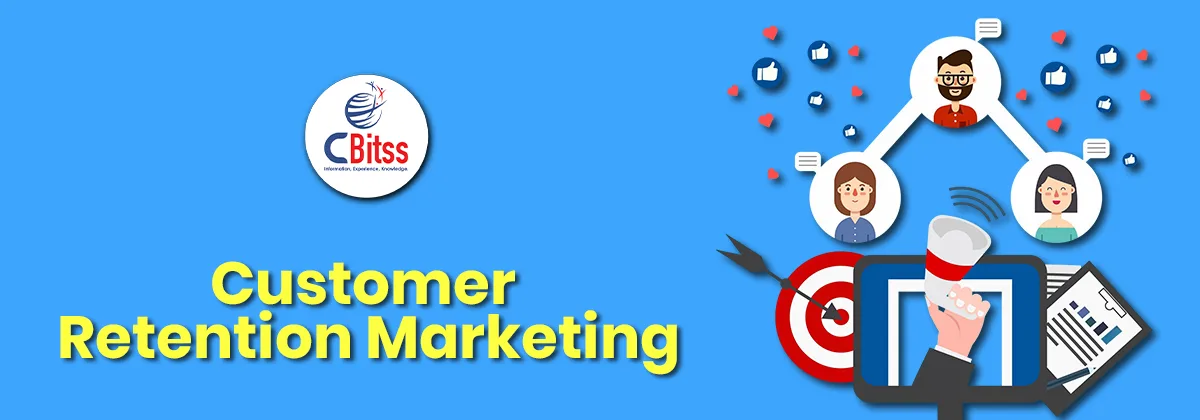
Have you ever questioned yourself why, even when your product is performing well, customers leave? This paper on Customer Retention Marketing will give you new thoughts on retention that most brands overlook. Furthermore, you will learn how strategic loyalty design can make you outperform competitors that do not go further than new buyer chasers.
Consequently, by the conclusion of this guide, you will therefore be able to appreciate the fact that retention marketing on customers influences both long-term brand strength. Additionally, you will also learn how direct mail marketing drives customer retention, profitability, and lifetime value, and how you can implement it in your customer journey right now.
Learn why design matters by exploring why are UI and UX important.
Why Customer Retention Marketing Matters
To start with, the digital world today is highly competitive, attention spans are set to decrease, and the cost of acquisition is also increasing. As such, brands need to change their transactional thinking to relationship-based systems. Moreover, customers demand customized attention, responsible use of data, and valuable communication.
Nevertheless, the emotional and psychological motivations that drive customers to revisit are underestimated by many companies.
Moreover, using this marketing or retention or marketo data retention policy in an effective manner, you will build trust, lower churn, and stabilize revenue. You also increase organic referrals in the same manner that the loyal customers market you automatically.
In the end, this compels competitors to strive harder at the time when you become more efficient. In such a way, retention is your most reliable growth channel.
Understand essential design concepts through the importance of UI UX design.
The Modern Science Behind Customer Commitment
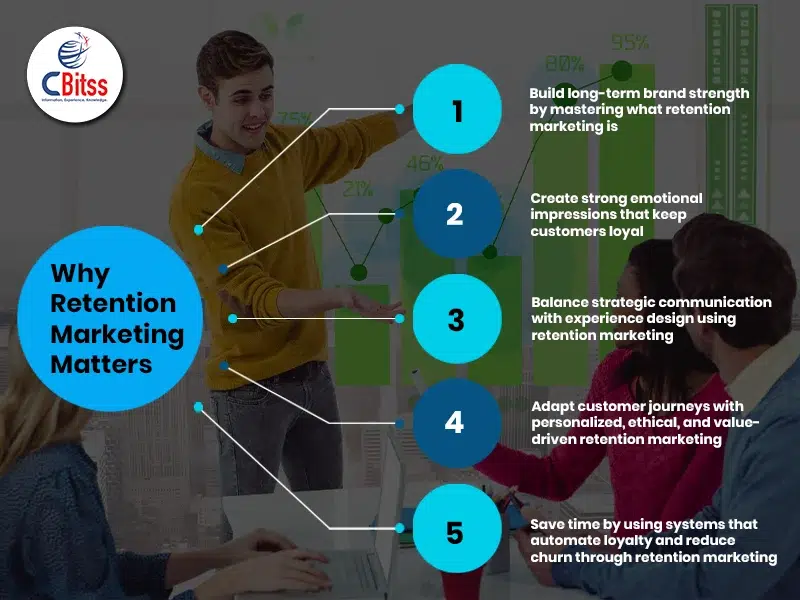
To begin with, Brands enhance Stickiness by drawing emotional touchpoints rather than transactional ones.
Secondly, firms create recovery routes that convert errors into loyalty indicators.
Moreover, micro-behaviors are also learnt by teams to predict churn in advance before customers lose contact.
Also, brands apply predictive loop models to schedule offers when their momentum of satisfaction is at its highest point.
Besides, companies combine story-based feedback mechanisms to entice customers into brand development.
This means that customers will feel visible, appreciated, and important, raising the loyalty level.
Boost your creative career by discoveringwhat are the advantages of taking a course in graphic design.
Boost repeat sales with smart, data-driven customer retention marketing strategies.
Fresh Tactics You Have Not Tried Yet
To begin with, the brands hardly investigate the theme of value reactivation campaigns that remind customers about the features of a product that are not in use. Further, the engagement is reactivated by these reactivation nudges without discounts.
Moreover, businesses are able to introduce so-called predictive gratitude triggers that can be used to send appreciation when something unexpected happens instead of when a purchase occurs.
Moreover, such unexpected emotional time raises loyalty to an enormous extent. On the same note, brands are creating identity-sharing loops, in which customers post stories of personal growth about your product, which does not exist in standard retention playbooks.
These methods, therefore, take customer retention marketing strategies to the next level of generic communication. Similarly, they enable customers to identify with your brand on an emotional level. Lastly, your retention engine is more true to itself, human, and sustainable.
Build better websites by learning how to use Elementor on WordPress.
Ethical Data Practices That Strengthen Loyalty
- First, it makes the companies involve clear data policies, such as a transparent marketo data retention policy, to establish customer confidence.
- In addition, the brands provide customers with dashboards that allow them to monitor the precise way data can be used to inform recommendations.
- Also, companies have days of privacy celebration, where they showcase privacy data victories.
- Moreover, it is a transparent data management that promotes trust when implementing customer retention marketing strategies.
- Likewise, ethical data communication guarantees the customers that their personalization does not overstep limits.
- This, in turn, increases loyalty as the customers believe your brand is keeping them safe.
Direct Mail’s Unexpected Renaissance in Loyalty Building
To begin with, most brands undervalue how direct mail marketing drives customer retention in an era when online platforms prevail. In addition, physical mail has the capacity of producing emotional memory since customers hardly receive personalized or handwritten packages.
Moreover, with kind offline messages, like milestone postcards or personal usage hints, customers will feel more than appreciated.
Also, such bodily movements disrupt online fatigue and rise in an overcrowded virtual environment. Likewise, as you combine your QR-linked loyalty experiences with your mail pieces, you combine old and new media to create an effective retention loop.
As a result, the brands rediscover a retro-channel which is considered by modern customers as a premium channel. Therefore, how direct mail marketing drives customer retention will be a competitive advantage.
Choose the right IT career path with PHP training in Chandigarh which PHP course is best.
Redesigning Onboarding as a Lifetime Journey
- To begin with, firms move onboarding to the lifelong learning path instead of a one-week process.
- Besides, this route has quarterly usage discoveries that enhance long-term value.
- Furthermore, the brands also send future previews that display the benefits that a customer will receive based on their loyalty milestones.
- In addition, onboarding is dynamically developed, depending on customer behavior, not on templates.
- Consequently, customers remain inquisitive and interested over the years.
- Finally, enhanced customer retention marketing strategies in various segments and across several segments.
Understand the fundamentals of cloud technology through how does cloud computing works.
Launch membership systems that build predictable revenue.
What Is Retention Marketing in Today’s Hybrid Economy?
Firstly, what is retention marketing nowadays? It is the art of remaining emotionally relevant despite the initial purchase. In addition, retention is proactive rather than reactive. Also, predictive analytics, emotional design, and experience choreography are now mixed in retention systems.
Additionally, brands create ecosystems, which evolve every day to meet customer expectations. Similarly, the question is no longer on how to retain customers, but rather on how to retain relevance to customers.
Therefore, knowing what is retention marketing will assist organizations to survive the present-day volatility. Therefore, retention is the phenomenon that determines whether brands dwindle or blossom. Lastly, leaders with this kind of mentality beat competition whose leaders focus on making a one-time conversion.
Start your cybersecurity journey with the top 5 cybersecurity institutes in Chandigarh.
Understanding What Is Retention in Marketing Beyond the Basics
In the first place, what is retention in marketing from a behavioral science perspective of marketing?
More so, it turns into the strategic reinforcement of identity, and not merely satisfaction.
Moreover, retention will make your customers feel part of your long-term story.
In addition, this identity relationship has more effects on repeat decisions compared to discounts.
Equally, the identity-enhancing brands keep customers longer.
This means that to answer the question of what is retention in marketing, the loyalty needs to be redefined as belonging.
Pick the right tech pathway by exploring which programming language is best for web development.
Turning Insight Into Action: A Future-Ready Retention Playbook
To start with, you need to sort customers using emotional drivers, and not demographic measures. Additionally, you are to create so-called value velocity maps to determine when the customers are in their peak momentum. Moreover, brands need to automate micro-moments of gratitude and reminder-based nudges with regard to product use. Moreover, you are to incorporate both offline gestures and online data of behaviors to generate seamless experiences.
Likewise, you should be measuring the indicators of depth-of-loyalty as opposed to the surface activity indicators. Therefore, this playbook changes your loyalty ecosystem.
Therefore, in the long run, use it regularly, and you increase customer retention. Lastly, you transform your retention engine into an autonomous growth engine.
Begin your mobile development journey with Kotlin app development.
Conclusion
To start with, the future of brands will be of those that consider loyalty as an experience, rather than a metric. In addition, by making a calculated investment in the retention of customers, you get out of the cycle of transactions. Moreover, you implement radical new models that your competitors haven’t considered yet.
Moreover, this strategy enhances trust and satisfies the customers. Equally, the key to sustainable growth lies in innovation, personalization, and ethical data clarity, such as having a transparent Marketo data retention policy. Therefore, as long as you have the right system, you increase the retention of customers automatically. Thus, in the process of implementing the concepts in this guide, you create a loyalty engine that runs on Customer Retention Marketing that is modern and human.
Strengthen your tech fundamentals by learning an introduction to networking.

J. Julia Kamei is a professional content writer with 4+ years’ experience creating impactful content for clients in the USA, India, Canada, the UK, and Europe. An M.A. History graduate, she specializes in immigration, business, IT, digital marketing, AI, and Data Science. She also mentors students for international education and research.